

Can Beef Liver Capsules Help With Fatigue? A Nutrient-Focused Guide
Can beef liver capsules help if you feel tired?
They may help if inadequate nutrient intake is part of the picture. But it is important to be precise about what that means.
Feeling tired is not a diagnosis, and a supplement is not an all-purpose source of energy. In my view as an academic research biologist, the sensible purpose of a supplement is to help close a nutritional gap—not to push nutrient intake ever higher in the hope of creating limitless energy.
That distinction matters. It is also why I am wary of the common “energy booster” language used around supplements. When someone feels better after improving their diet or adding a nutrient-dense food supplement, the most credible explanation is often that an inadequate intake has been improved. That may be meaningful and welcome. It is not evidence that more and more supplementation will create more and more benefit.
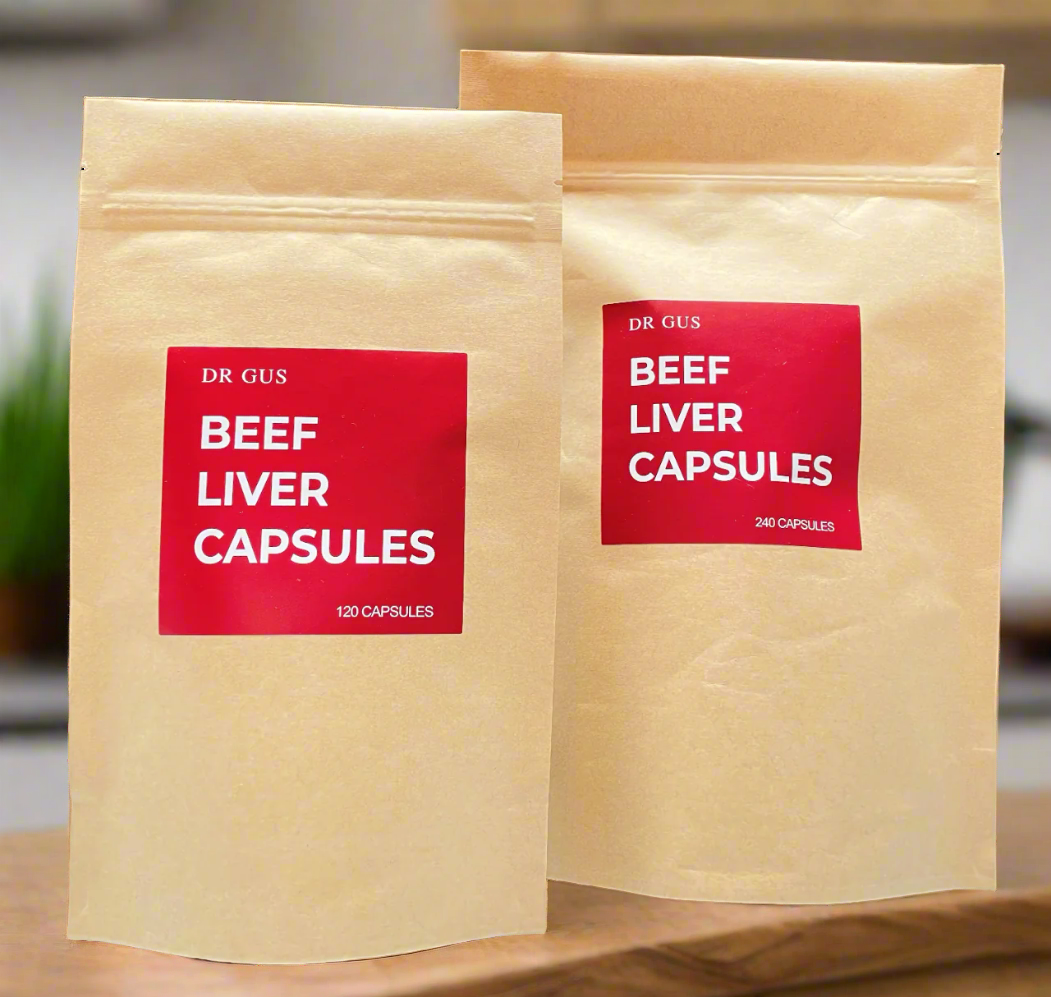
Our organic grass-fed beef liver capsules are made in the UK from freeze-dried whole beef liver. They are designed as a convenient way to include a small amount of this nutrient-dense food for people who do not eat liver regularly—not as a replacement for a varied diet, adequate sleep, daylight, movement or professional medical advice where it is needed.

The short answer: vitamin B12 is the most relevant nutrient here
Beef liver naturally contains a range of nutrients, including vitamin B12, folate, vitamin A, choline, copper, zinc and iron. Yet “contains” is not the same as “provides enough to make a particular claim.” The amount in the recommended serving matters.
Per two-capsule serving, DR GUS beef liver capsules provide:
The important point is straightforward: vitamin B12—not iron alone—is the most defensible nutrient-based explanation for why the capsules may support normal energy metabolism and help reduce tiredness and fatigue when intake is inadequate.
In Great Britain, vitamin B12 is authorised for the claims that it contributes to normal energy-yielding metabolism and to the reduction of tiredness and fatigue, provided the food meets the required conditions for use of the claim. Those are the claims that should guide how we talk about this product—not sweeping promises about “boosting energy.”
Why B12 can matter more after 40
Vitamin B12 is naturally found in animal-derived foods, including meat, fish, eggs and dairy. People who eat little or no animal food may find it harder to obtain enough from an unfortified diet. But food intake is only one part of the story.
As we get older, absorption can become more complicated. B12 from food is protein-bound and must first be released in the stomach before it can be absorbed with the help of intrinsic factor. Age-related changes in stomach acidity, some medicines and certain digestive or autoimmune conditions can affect this process. That is why persistent symptoms should never be casually written off as a need for a stronger supplement.
Vitamin B12 deficiency can be associated with tiredness and weakness, but those symptoms are not specific to B12. If fatigue continues, is substantial, or does not make sense in the context of sleep, food intake and lifestyle, proper assessment and blood tests are far more useful than guessing.
What about iron, folate and the other nutrients in liver?
Iron: important, but do not overstate this product’s dose
Iron is essential for normal oxygen transport and normal energy-yielding metabolism. Inadequate iron status can contribute to fatigue. This is particularly relevant for women before menopause, who may lose iron through menstruation.
However, the labelled iron amount in two DR GUS beef liver capsules is 0.235 mg. That is not a reason to market the capsules as an iron-deficiency treatment or to suggest they can replace testing, diagnosis or prescribed treatment. Iron deficiency has multiple possible causes, and self-treating without establishing the cause is not good practice.
The accurate position is simpler: the product supplies naturally occurring iron as part of a whole-food nutrient profile, while vitamin B12 is the more meaningful nutrient for the authorised tiredness-and-fatigue claim at the stated serving size.

Folate and B12 work as a team
Folate and vitamin B12 both contribute to normal blood formation. A low intake of either can be relevant to nutritional adequacy. The capsules provide some folate, but they should still be viewed as one contributor to the diet, rather than a substitute for eating well.
Vitamin A, copper, zinc and choline: part of the whole-food picture
One reason liver has traditionally been regarded as nutrient-dense is that it contains a broad mix of vitamins and minerals rather than one isolated compound. That is a useful feature, especially for people whose diets have become repetitive or light on animal foods.
But a broad nutrient profile is not a licence to take excessive amounts. More is not automatically better, particularly for nutrients such as vitamin A and copper. Use the product as directed, and be mindful of other supplements that contain the same nutrients.
A food-first approach to feeling more robust
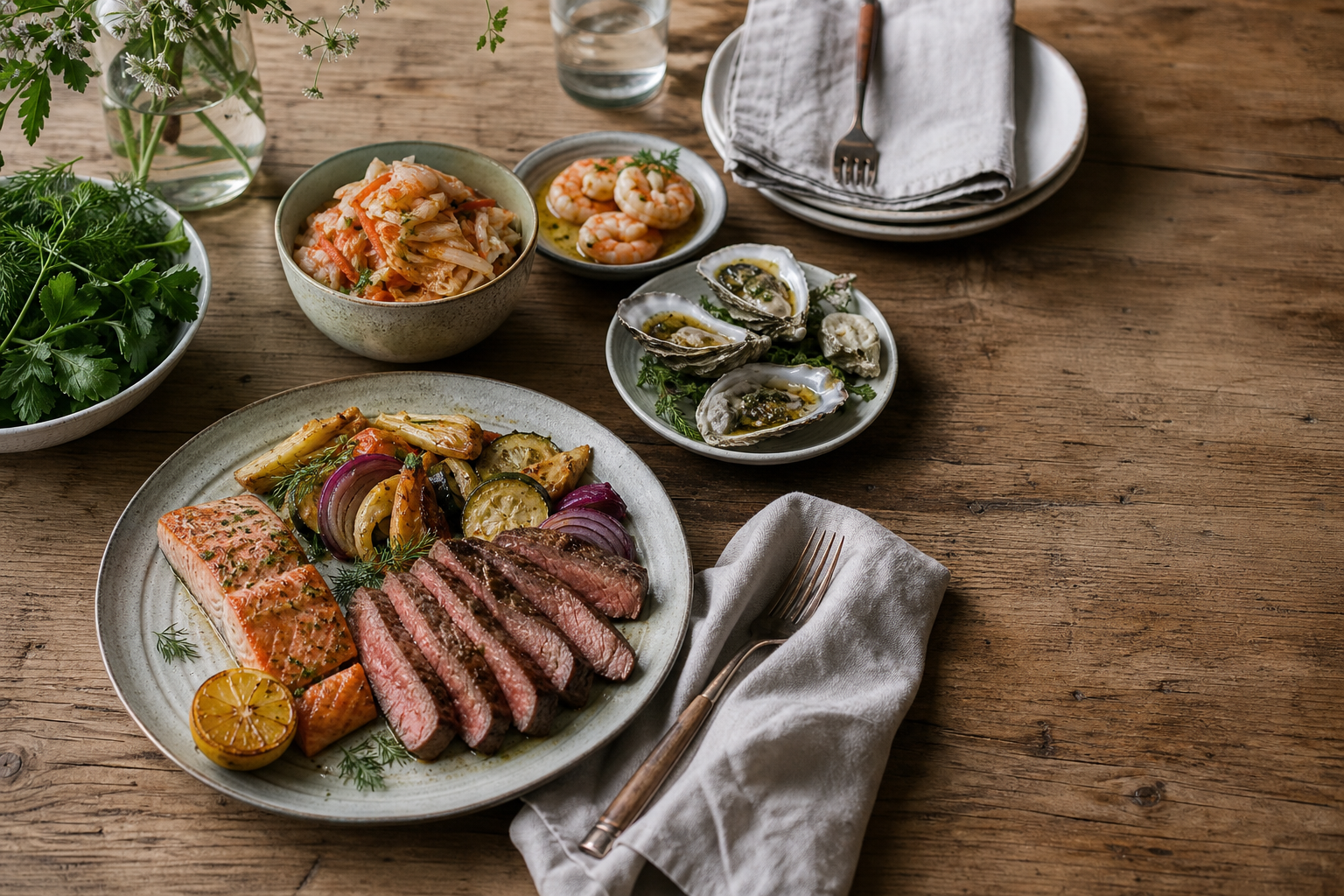
I would always start with the diet. For people who tolerate and choose to eat animal foods, a practical baseline is to include a variety of seafood and meat through the week, aiming for at least one meal containing animal protein per day and preferably two.
That does not mean every meal must be perfect. It means building a pattern that is more likely to supply adequate protein and a useful range of naturally occurring micronutrients.
For someone who dislikes liver, does not have time to prepare it, or cannot afford to buy a wide range of high-quality animal foods regularly, a capsule can be a convenient adjunct. It is not a replacement for a meal. Nor is it a substitute for the basics that strongly influence how people feel day to day:
-
Adequate overall food intake and protein.
-
Regular daylight exposure and time outdoors.
-
Consistent, sufficient sleep.
-
Regular movement and appropriately dosed exercise.
-
A diet that is varied rather than built around a narrow handful of foods.

Why fatigue deserves an honest answer
My research background includes work on exercise fatigue, muscular fatigue and the central and peripheral factors that influence performance. One lesson from that field carries over well to everyday life: fatigue is multifactorial.
It is rarely intellectually satisfying—or scientifically honest—to point to one capsule, one vitamin or one lifestyle habit and claim it explains everything. Nutrient inadequacy can matter. So can sleep, calorie intake, activity, stress, illness, medication, menopause, absorption problems and many other factors.
This is why our customer feedback is encouraging but should be interpreted carefully. Some customers tell us that after introducing beef liver capsules, their “energy is back” and they “feel normal again.” We are pleased to hear that. But we do not know from that feedback which nutrient was limiting, whether diet or lifestyle changes happened at the same time, or whether the same experience will apply to someone else.
The responsible interpretation is: if a person’s diet was not meeting their needs, a nutrient-dense food supplement may be helpful. It is not a guaranteed fatigue cure.
How to take DR GUS beef liver capsules
We recommend taking two to six 500 mg capsules daily with food. That equates to 1–3 g of freeze-dried whole beef liver daily.
Freeze-drying is deliberately used because it is a gentler process than conventional heat desiccation. The aim is to produce a convenient whole-food capsule without fillers, flow agents or synthetic vitamins.
Start with the labelled serving that suits you. Do not assume that taking the highest dose—or combining several products with overlapping nutrients—will necessarily be better.
Beef liver capsules or beef organ capsules?
If your goal is specifically to add the characteristic nutrient profile of liver to an otherwise solid diet, our beef liver capsules are the focused option.
If you prefer a broader nose-to-tail formula containing liver, heart and kidney, consider our grass-fed beef organ capsules.
You can also compare the range in our beef organ supplements collection.
The bottom line
Beef liver capsules can be a practical way to support nutritional adequacy for people who do not regularly eat liver or who have a low intake of nutrient-dense animal foods. For this product, the strongest fatigue-related rationale is its vitamin B12 content and the authorised role of B12 in normal energy-yielding metabolism and the reduction of tiredness and fatigue.
They are not a replacement for good food, sleep, daylight, movement or medical assessment where symptoms persist. My preference is always to improve the foundation first, then use supplements thoughtfully to close genuine nutritional gaps—not as a way to override the body’s signals.
About the author
Dr Paul Sumners, PhD is an academic research biologist, Functional Patterns practitioner and the founder of DR GUS Nutrition. His work includes more than 30 research publications and patents, including research relevant to exercise physiology and fatigue.
References
-
UK Government. Great Britain nutrition and health claims register. See authorised vitamin B12 claims relating to normal energy-yielding metabolism and reduction of tiredness and fatigue.
-
NIH Office of Dietary Supplements. Vitamin B12: Health Professional Fact Sheet.
-
DR GUS Nutrition product label. Nutritional values per two capsules; accessed August 2026.
Leave a comment
Comments will be approved before showing up.