

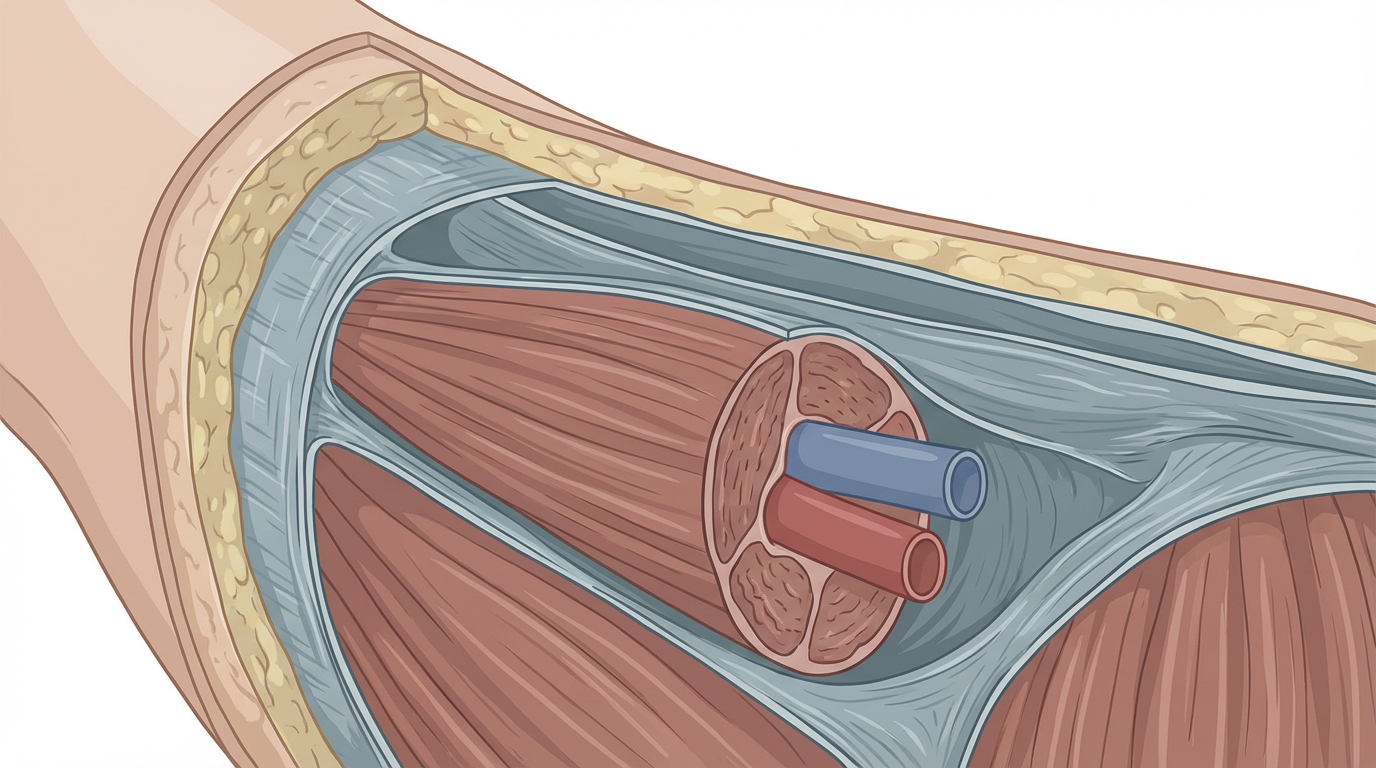

Fascia & Heart Disease 1
As you all know now, I am fascinated by fascia and its role in seemingly everything that goes on in the body. After some discussions with Naudi Aguilar and Pablo Martin at Functional Patterns I was made aware of how fascia likely plays a role in heart disease. So, I started doing a bit of digging and there's actually a lot of ground to cover, so I will break this up into 3 or 4 articles:
Fascia & Blood Pressure: The Missing Piece?
When we think about blood pressure, we usually focus on the heart and blood vessels.
But there's another system wrapped around both of those: fascia.
This connective tissue network surrounds every artery and plays a direct role in how easily blood flows through your body.

Fascia Controls Vascular Tension
Blood pressure is largely determined by peripheral resistance—how tight or relaxed your blood vessels are.
Fascia influences this by:
- surrounding arteries
- responding to tension and inflammation
- affecting how easily vessels expand
When fascia becomes stiff or restricted:
- vessels may not dilate as efficiently
- resistance increases
- pressure rises
Think of it like this: If the "sleeve" around a hose tightens, flow becomes harder.

A Mechanical System, Not Just a Chemical One
We often think of blood pressure as neural or hormone-driven. But it's also mechanical.
Fascia:
- transmits tension through the body
- responds to movement and posture
- physically interacts with blood vessels
Healthy fascia supports:
- smooth expansion and contraction of vessels
- better circulation
- lower vascular strain
Movement Is the Key Signal
When you move:
- fascia stretches and glides
- this stimulates blood vessels
- vessels respond by relaxing
Less movement = more stiffness
More stiffness = higher resistance
This is one reason why: → regular movement lowers blood pressure
The Takeaway
Fascia acts like a tension regulator around your vascular system. When it's:
- elastic & hydrated → blood flows easily
- stiff & dehydrated → pressure builds
Supporting fascia isn't separate from heart health—it's part of the same system.
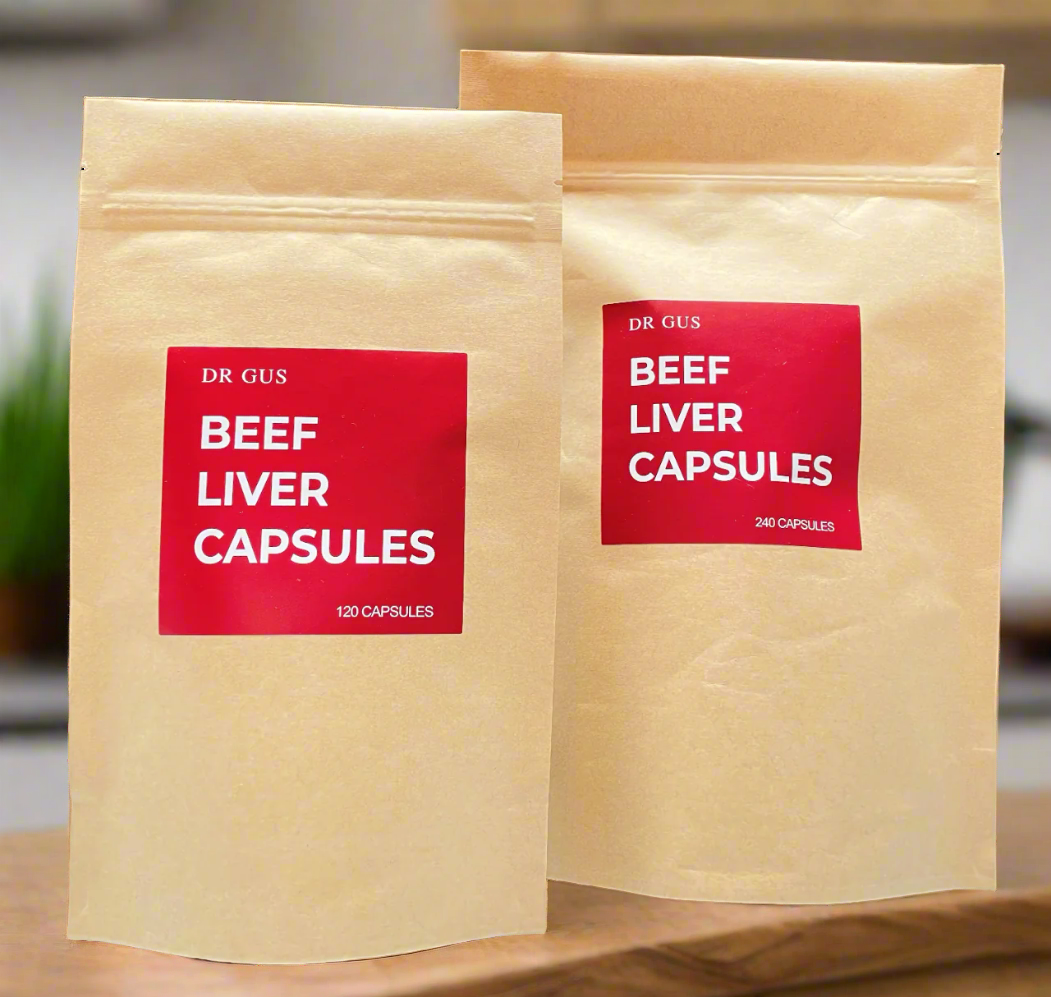
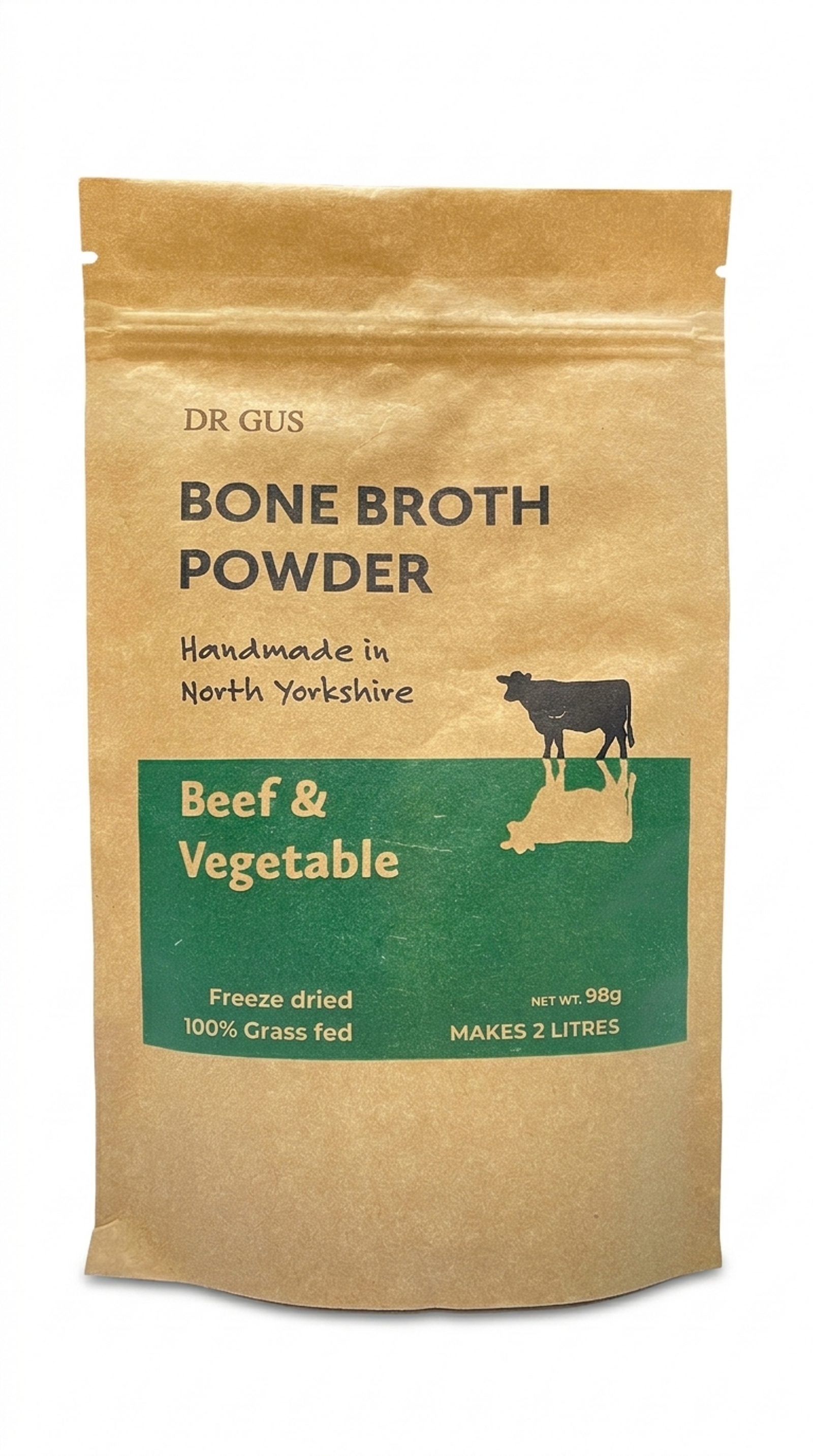
Nourish your fascia daily with our Bone Broth Powder range — rich in collagen, glycine and hyaluronic acid. For additional connective tissue support, try our Type II Collagen Capsules and Beef Organ Supplements.
1 Response
Leave a comment
Comments will be approved before showing up.




Jacqueline
August 27, 2026
I have scleroderma and worry about my connective tissue as that is involved in my disease could these things help me ?