

Fascia, Inflammation & Heart Disease — The Bigger Picture
Introduction
Most discussions about heart disease focus on cholesterol, blood pressure, and exercise. But cardiovascular disease rarely occurs in isolation. People with heart health challenges often struggle with joint stiffness, reduced mobility, and chronic systemic inflammation.
This raises a provocative question: Could heart disease be one part of a body-wide connective tissue problem?
The Fascia Network: One Continuous System
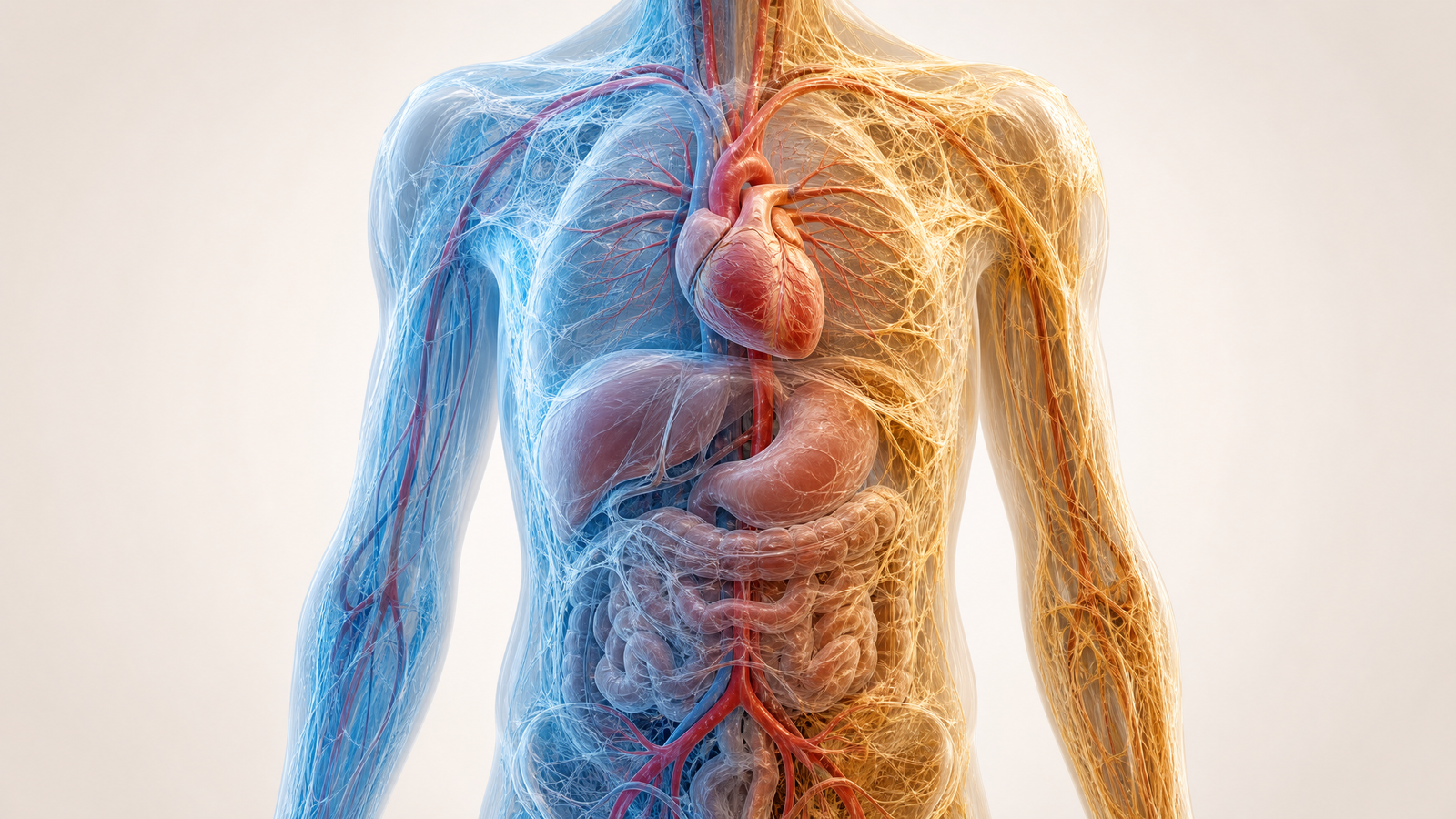
Fascia is the body's largest connective tissue system. It is a biological "web" that surrounds every muscle, bone, organ, and nerve. Crucially, it also surrounds every blood vessel and the heart itself.
Rather than being a series of separate parts, fascia connects the entire body into one continuous network. When this network is healthy, it is elastic and hydrated. But when it becomes fibrotic, the entire system starts to fail.

Fibrosis: The Common Thread
One of the strongest predictors of aging and disease is fibrosis. This occurs when the body replaces flexible, functional tissue with dense, rigid, fibrotic collagen. We see this "internal scarring" in:
- Stiffened arteries (Atherosclerosis)
- Heart muscle remodeling
- Chronic joint stiffness
- Organ dysfunction
From a fascial perspective, heart disease may simply be one expression of a body-wide fibrotic process. When your fascia is "armoring" up and losing elasticity, your arteries and heart are often doing the same.

The Inflammation & Lymphatic Loop
Chronic inflammation is the "fuel" for fibrosis. It stimulates the body to produce excessive, disorganized collagen. But there is a mechanical side to this, too.
One of fascia's least appreciated roles is supporting lymphatic drainage. The lymphatic system is your body's waste disposal service, removing toxins and regulating inflammation. Unlike blood, lymph relies on movement and the "pumping" action of healthy fascia to flow.
When fascia becomes restricted through poor posture, lack of movement, or stress:
Less movement → Congested lymph flow → Retained inflammation → More Fibrosis.
The Extracellular Matrix (ECM): The Real Battlefield
Many researchers now believe the Extracellular Matrix (ECM)—the biological scaffold that makes up our fascia—is the missing piece in cardiovascular research. The ECM determines how your cells communicate and how your tissues hydrate.
When the ECM becomes "stiff" due to poor lifestyle and nutrition, nutrient delivery to the heart declines and cellular signaling breaks down. Heart disease, in this light, is not just a "plumbing" problem; it is a connective tissue problem.

Conclusion: The Bigger Picture
The heart does not exist in a vacuum. It sits within the same fascial network and shares the same inflammatory environment as your joints and muscles.
When we see fibrosis, chronic inflammation, and tissue stiffness in the body, we are looking at a system-wide pattern. By supporting healthy connective tissue—through movement, hydration, and targeted nutrition—we aren't just "training"; we are supporting the long-term resilience of the entire cardiovascular system.
Thanks to Naudi Aguilar and Pablo Martin from Functional Patterns for stimulating this discussion.
Support your connective tissue with our Bone Broth Powder range — rich in collagen and glycine to keep fascia elastic and hydrated. For targeted support, try our Type II Collagen Capsules and our Beef Organ Supplements including heart, which is a natural source of CoQ10.
Leave a comment
Comments will be approved before showing up.