


Can Beef Liver Capsules Cause Gout?
If you have experienced gout, it is understandable to look closely at anything new in your diet—including beef liver capsules.
The short answer is: beef liver is naturally high in purines, so it may not be suitable for everyone with gout or raised uric acid. However, I do not think gout should automatically be viewed as a simple "meat problem" or a "protein problem".
Gout is more complex than that. In my professional and personal view, alcohol, sugar and fructose deserve far more attention than they often receive in conversations about gout.
At DR GUS, we believe in being straight about both the potential benefits and the limitations of food-based supplements. This article explains the issue clearly, without pretending there is one rule that applies to everyone.
First, what is gout?
Gout is a form of inflammatory arthritis associated with raised levels of uric acid. When uric acid builds up, crystals can form in and around a joint, leading to sudden episodes of severe pain, swelling, redness and tenderness—often in the big toe, but sometimes in the ankle, knee, wrist or other joints.
Uric acid is produced when the body breaks down purines. Purines occur naturally in the body and are also found in varying amounts in food.
This is why organ meats, including liver, are often put on the list of foods to limit for people who have gout. Liver is a concentrated, nutrient-dense food, but it is also high in purines. That is a relevant consideration—not something we should ignore.
So, can beef liver capsules cause gout?
It would be inaccurate to say that beef liver capsules cause gout in everyone. Gout has many influences, including genetics, kidney function, body weight, metabolic health, medication use, hydration, alcohol intake and overall dietary pattern.
But if you already have gout, high uric acid, kidney disease, or you know that purine-rich foods trigger your attacks, beef liver capsules may not be the right supplement for you—or they may require a discussion with your GP, pharmacist or specialist first.
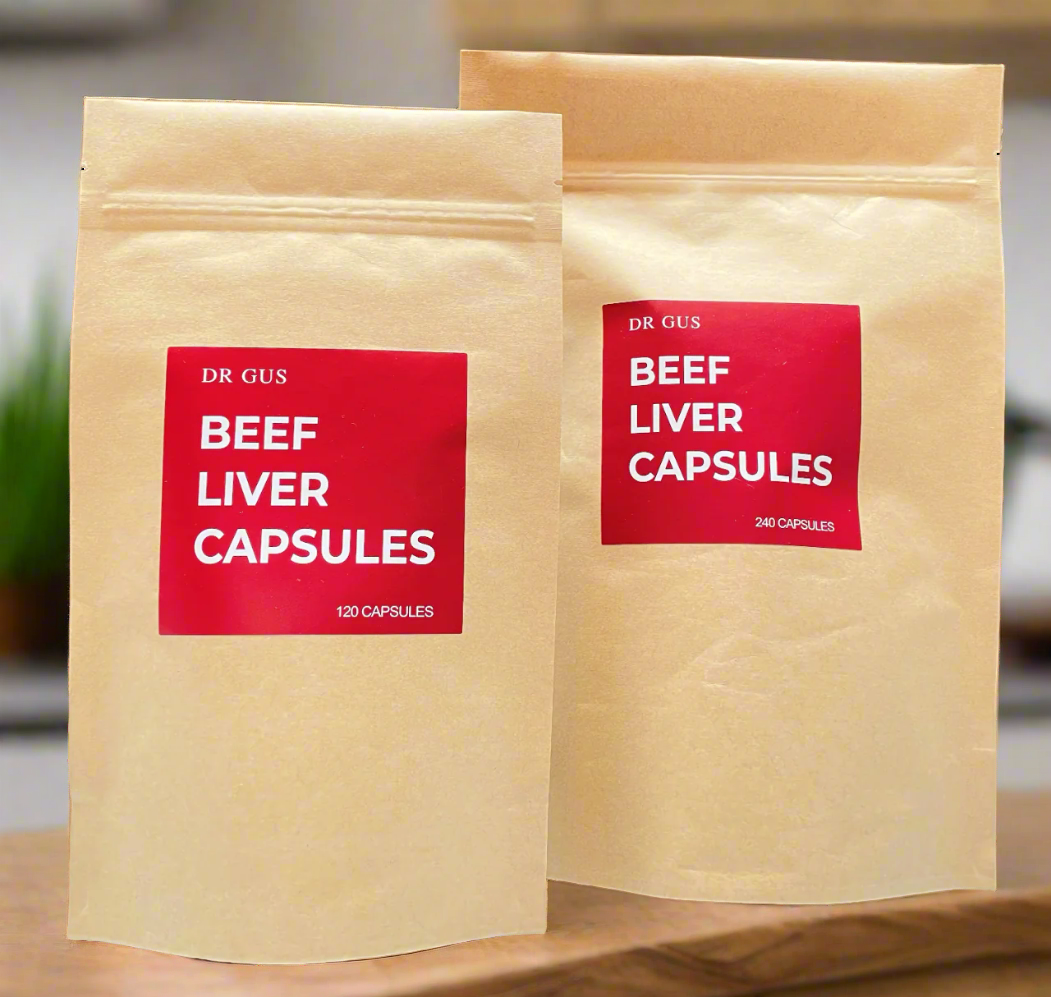
DR GUS Beef Liver Capsules contain only 100% organic grass-fed beef liver in a bovine gelatin capsule. There are no fillers, no added ingredients, and no heart, kidney or mixed organs. That simplicity is important, but it does not change the fact that liver itself is a purine-rich food. If you are looking for a broader organ supplement, our Grass-Fed Beef Organ Capsules (Liver, Heart & Kidney) may be worth considering, though the same purine considerations apply. You can also browse our full Beef Organ Supplements collection.
As a general guide, authoritative gout-diet advice continues to recommend limiting organ meats such as liver, alongside certain seafoods and alcohol. Mayo Clinic makes this point clearly.

But is gout really just about red meat and protein?
In my view, no.
For many years, the conversation around gout has focused heavily on meat, seafood and purines. These can matter—particularly organ meats and certain types of seafood—but focusing only on them can miss the wider metabolic picture.
I have a PhD in human physiology and more than 30 years of active academic research experience, including over 30 published papers and patents in the field. My own reading of the evidence, alongside my personal experience, is that gout is often linked more closely to fructose, sugar and alcohol than to eating animal protein alone.
That does not mean animal foods are irrelevant. It means that they should not automatically be blamed while the rest of a person's diet and lifestyle is overlooked.
Fructose, sugar and alcohol: the factors worth examining
Fructose is a naturally occurring sugar found in fruit and honey, and it is also a component of table sugar. It is widely used in sweetened foods and drinks. Alcohol can also raise uric acid and is a well-recognised trigger for many people with gout, especially beer and spirits.
The relationship between fructose, sugary drinks and gout risk has been widely discussed in research and clinical guidance. Research has linked higher fructose intake, sugar-sweetened drinks, fruit juice and some fructose-rich fruits with a greater risk of gout in men — and a 2025 meta-analysis further confirmed this association across a broader body of evidence.1,3 This does not prove that one food causes every flare in every person, but it supports looking beyond meat alone.
The practical message is uncomplicated: if you are prone to gout, it makes sense to look carefully at the amount of:
-
Alcohol, particularly beer and spirits
-
Sugary drinks and fizzy drinks
-
Fruit juice and smoothies
-
Sweets, desserts and sweetened snacks
-
Dried fruit
-
Large or frequent servings of sweeter fruit
you are consuming.
A gout-friendly approach should look at the whole picture, not simply remove nutritious foods one by one.
What about fruit?
Fruit can be a useful part of many people's diets. It contains fibre, micronutrients and plant compounds. This article is not saying that everyone should avoid fruit, or that fruit is inherently unhealthy.
However, fruit is also a source of sugar, including fructose. Modern eating fruit has generally been selected over generations for sweetness, size, texture, appearance and shelf-life. It is also available all year round, often in generous portions, making it easy to consume more frequently than might once have been usual.
For someone who is susceptible to gout, it may be sensible to pay attention to personal reactions to sweeter fruits—not just to obvious sources of sugar such as biscuits, cakes, fizzy drinks and alcohol.
Fruit juice and smoothies deserve particular caution. They can deliver the sugar from several pieces of fruit in a very short time, with less chewing and often less of the natural structure that makes whole fruit more filling.

My personal experience with apples and gout
This is not a universal rule, but it is a useful example of why individual triggers matter.
For me, apples are a reliable trigger for gout flares. I have found that this can happen regardless of what else is going on in my diet.
By contrast, when I keep fructose and alcohol low—and eat a diet based mainly on meat and seafood, without much sugar or fruit—I do not experience gout flares.
That is my personal experience. It is not a claim that apples cause gout in everybody, nor a recommendation that all people with gout should stop eating apples. But it is a reminder to question assumptions and observe your own patterns carefully.
Some people may tolerate apples without issue. Others may find that alcohol is the clear trigger, or that sweet drinks, dehydration, illness, stress, rapid weight loss, certain seafoods or high-purine foods are more significant. Gout triggers can be highly individual.
Should you take beef liver capsules if you have gout?
If you have been diagnosed with gout, have raised uric acid, or have had unexplained episodes of painful, swollen joints, speak with your GP, pharmacist or rheumatology team before taking a liver supplement.
That is particularly important because liver is rich in purines and because gout is not something to self-diagnose. Other conditions can cause joint pain and swelling, and repeated gout attacks need appropriate assessment and management.
You may wish to discuss:
-
Your current uric acid level
-
Your gout history and known triggers
-
Any kidney problems
-
Current medication, including uric-acid-lowering medication
-
Your typical intake of alcohol, sugary foods and drinks, juice, smoothies and fruit
-
Whether a liver-based supplement is appropriate for you
Do not stop prescribed gout medication or alter your treatment plan based on an online article or supplement advice.
A sensible approach to gout and diet
If gout is a concern, avoid jumping to the conclusion that one food is solely responsible. Instead, take a broader, practical view:
-
Look at alcohol honestly. Beer and spirits are common issues for many people.
-
Reduce obvious sugar. Start with sugary drinks, sweets, desserts and highly processed foods.
-
Be mindful of fructose. Consider fruit juice, smoothies, dried fruit and frequent large portions of sweet fruit.
-
Consider hydration. Dehydration may contribute to attacks in some people.
-
Identify your own patterns. A simple food-and-symptom diary can be more informative than blanket dietary rules.
-
Consider purine-rich foods too. Liver, kidney, certain seafoods and large amounts of red meat may matter for some people.
-
Seek medical advice. Current clinical guidance recommends limiting alcohol, purine-rich foods and high-fructose corn syrup for people with gout, while making clear that diet is only one part of management — prescribed urate-lowering treatment and GP-led monitoring remain important where appropriate.2
The bottom line
Beef liver capsules do not automatically cause gout. But because liver is naturally high in purines, they may be unsuitable for people with gout, high uric acid or known sensitivity to purine-rich foods.
At the same time, gout should not be reduced to a simplistic warning about animal protein. In my view, the wider metabolic context matters greatly—especially alcohol, sugar and fructose intake.
The most useful approach is not fear of one food. It is understanding your own triggers, addressing the obvious dietary pressures first, and getting medical advice where needed.
Important: This article is for general information only and is not medical advice. If you have gout, raised uric acid, kidney disease, take regular medication, are pregnant or breastfeeding, or have a medical condition, speak to your GP, pharmacist or relevant healthcare professional before using food supplements.
References
Choi HK, Curhan G. Soft drinks, fructose consumption, and the risk of gout in men: prospective cohort study. BMJ. 2008;336:309–312. doi:10.1136/bmj.39449.819271.BE
FitzGerald JD, Dalbeth N, Mikuls T, et al. 2020 American College of Rheumatology Guideline for the Management of Gout. Arthritis Care & Research. 2020;72(6):744–760. doi:10.1002/acr.24180
Lu Y, Wang Y, Huang R, et al. Sugar-sweetened beverages and the risk of hyperuricemia and gout: a meta-analysis. Frontiers in Nutrition. 2025;12:1669129. doi:10.3389/fnut.2025.1669129
Leave a comment
Comments will be approved before showing up.